


Ling-Wei Kung
- Associate Research Fellow, Institute of History and Philology, Academia Sinica
- JSPS International Fellow, Tōyō Bunko (2026–27)
I am a historian of early modern/modern China and Inner Asia, with a focus on information, technology, and knowledge in international and comparative contexts.
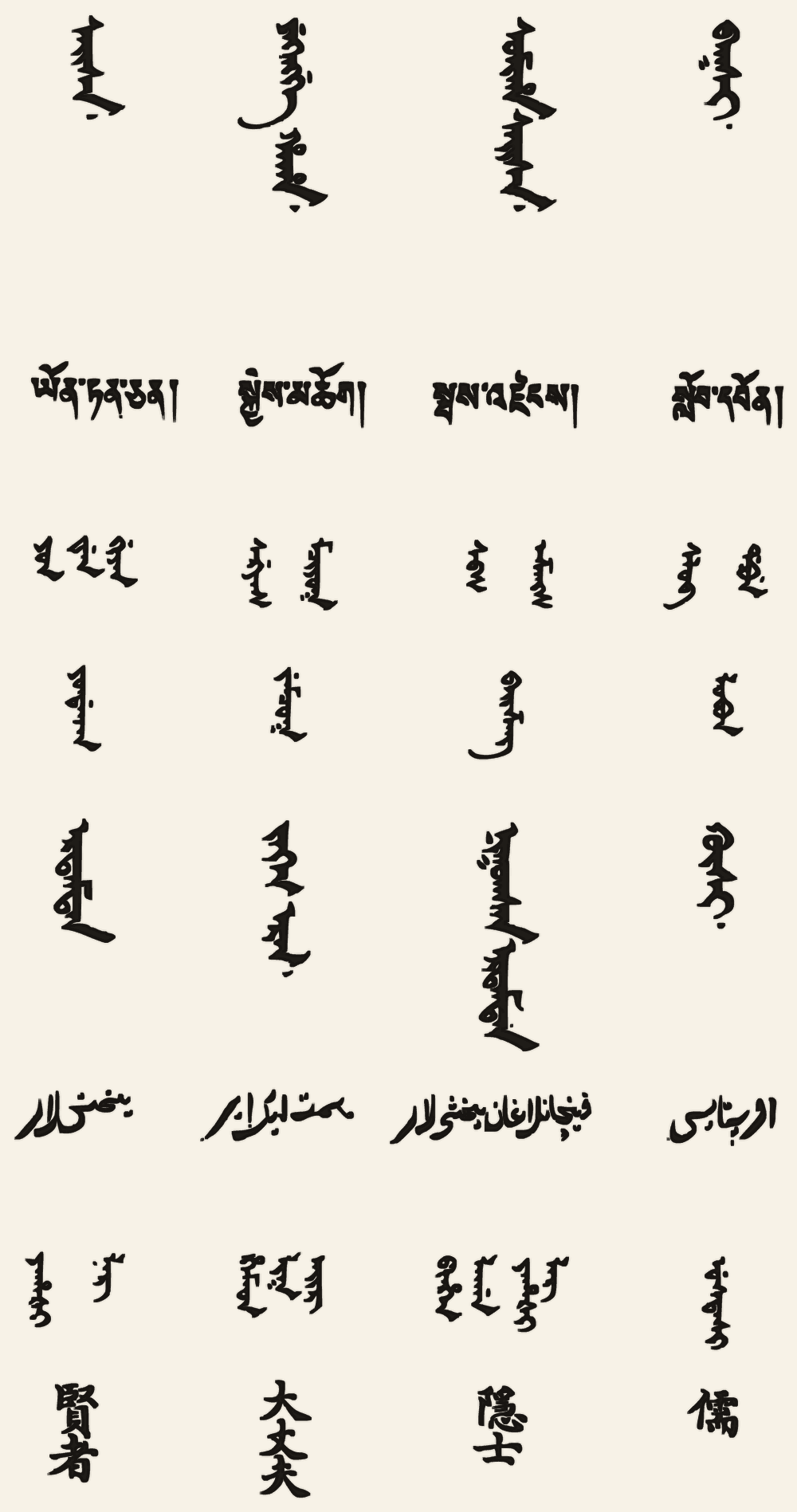
Selected Publications
Featured article · 2025
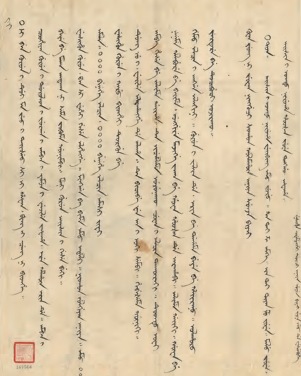
“Information Circulation between Manchuria, Korea, and Japan before the Qing Conquest of China” [in Chinese].
Bulletin of the Institute of History and Philology 96, no. 3 (2025): 499–566.
I reconstruct how the early Qing learned about Japan through Korea, showing how intelligence, translation and trade linked continental expansion with maritime knowledge.
Manchu translation of a 1639 letter from the lord of Tsushima to the Chosŏn Ministry of Rites (detail). Grand Secretariat Archives, Institute of History and Philology, Academia Sinica.
- 2026
“Polyglot Lexicons and Encyclopedic Works in Late Imperial China.”
Encyclopedia 6, no. 1 (2026): 5.
- 2025
“Information Circulation and Patron-Priest Relationship between the Early Qing Dynasty and Tibet” [in Chinese].
Bulletin of the Institute of Modern History, Academia Sinica 129 (2025): 1–54.
- 2025
Revue d’Études Tibétaines 78 (2025): 186–221.
I examine how negotiations over Tibet transformed the meanings of sovereignty and suzerainty, connecting diplomatic translation to changes in Eurasian legal and political order.
- 2025
“The Issues of the Sixth Dalai Lama and the Transformation of Qing Information System on Tibet.”
Religions 16, no. 1 (2025): 31.
Book in Progress
Book manuscript in progress
Governing beyond Death
The Dalai Lama, Reincarnation, and the Making of Early Modern China
How does sacred authority endure when the person who embodies it dies? This project examines Tibetan Buddhist reincarnation as a problem of religious succession and statecraft, connecting Buddhist history with the history of empire.
News & Talks
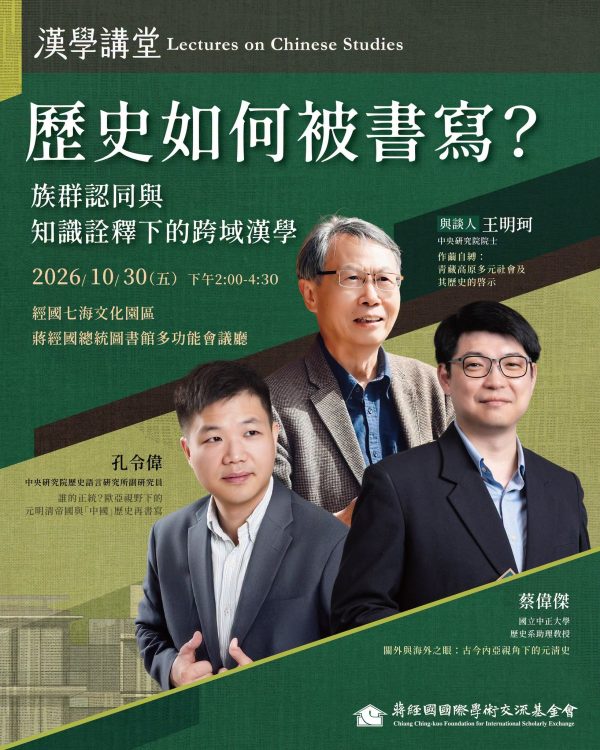
Upcoming lecture · 2026.10.30
Chiang Ching-kuo Foundation Sinology Lecture, Chiang Ching-kuo Presidential Library, Taipei
- 2026.10.28
“Triangulating Empire: The Manchus, Chosŏn Korea, and Edo Japan in the Information Order of Seventeenth-Century Northeast Asia.”
Upcoming lecture, Hanyang University, Seoul
- 2026.10.23
“The Politics of Taste: Good Cooking, Hospitality, and Qing–Inner Asian Relations.”
Upcoming conference paper, Sensing Dining Tables, Chonnam National University, Gwangju
- 2026.09.26
“The Kangxi-Era Map of Ili and Qing Geographical Knowledge of the Western Regions.”
Conference paper, international research meeting, Institute for Research in Humanities, Kyoto University
- 2026.09.01–02
Paper and panel chair, Ninth International Conference on Tibetan Archaeology and Art.
Sichuan University, Chengdu
- 2026.08.12
Workshop: The IHP and the Making of Modern Chinese Historiography (convener).
Institute of History and Philology, Academia Sinica
- 2026.06.17
“Was Qing China Closed? Information Exchange between Early Modern China and Eurasia.”
Chiang Ching-kuo Foundation Sinology Lecture, Chiang Ching-kuo Presidential Library, Taipei
Digital Humanities
Connecting historical sources, spatial analysis, and interactive maps to make Inner Asian history accessible for exploration.
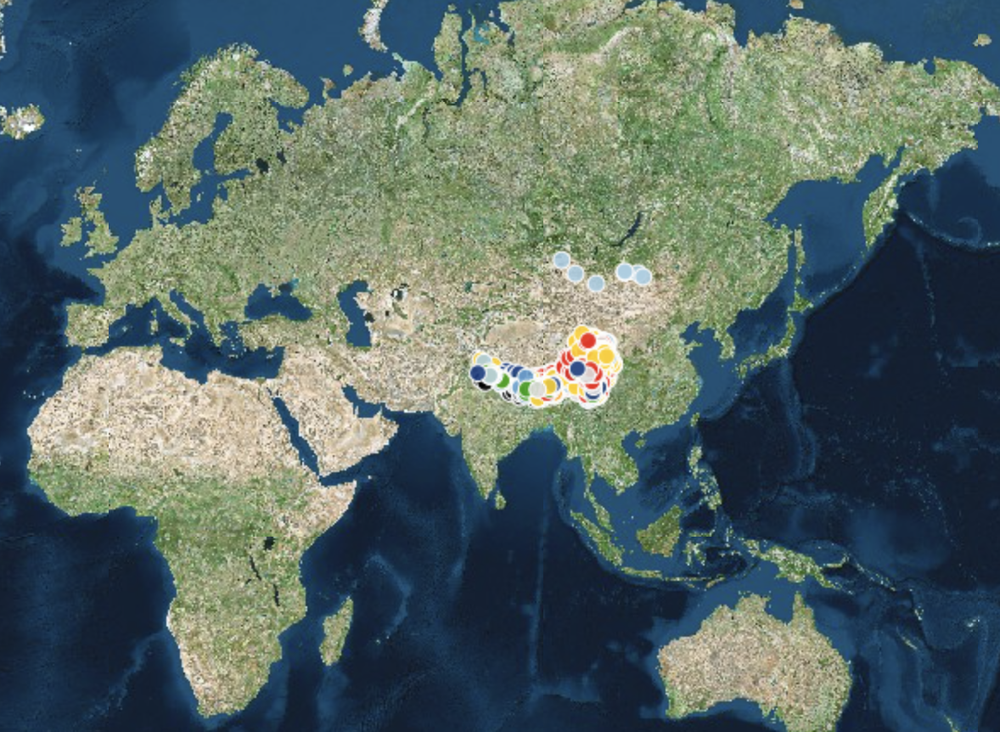
Mapping Tibetan Monasteries
Project Lead
Explore monastery affiliations, founding dates, and Amdo livestock records through interactive maps. The current system is built and maintained by the Ling-Wei Kung Research Lab.
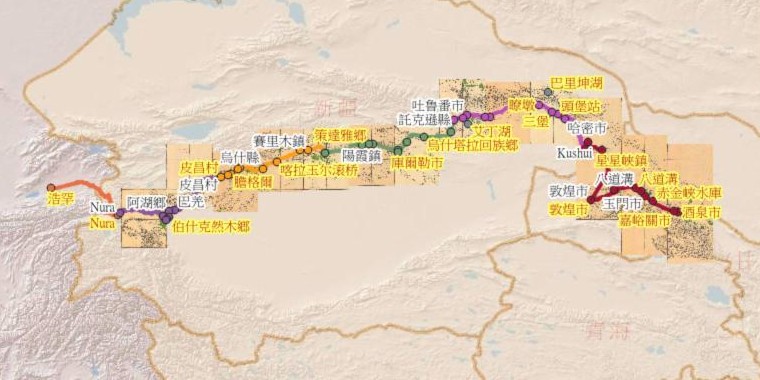
Historical GIS of the Wanli Huijiang Tu
Project Lead (with Hsiung-Ming Liao)
Combines Qing maps, annotations, and Manchu and Chinese records with GIS to reconstruct routes and examine how infrastructure shaped geographical knowledge. Historical maps, routes, and place names can be overlaid for comparison.