
NEW PUBLICATION · NOVEMBER 2026
The Multilingual World of Buddhist Scriptures
The Diamond Sutra, the Dragon Canon, and Chinese–Manchu–Mongolian–Tibetan Cultural Exchange under the Yuan, Ming, and Qing
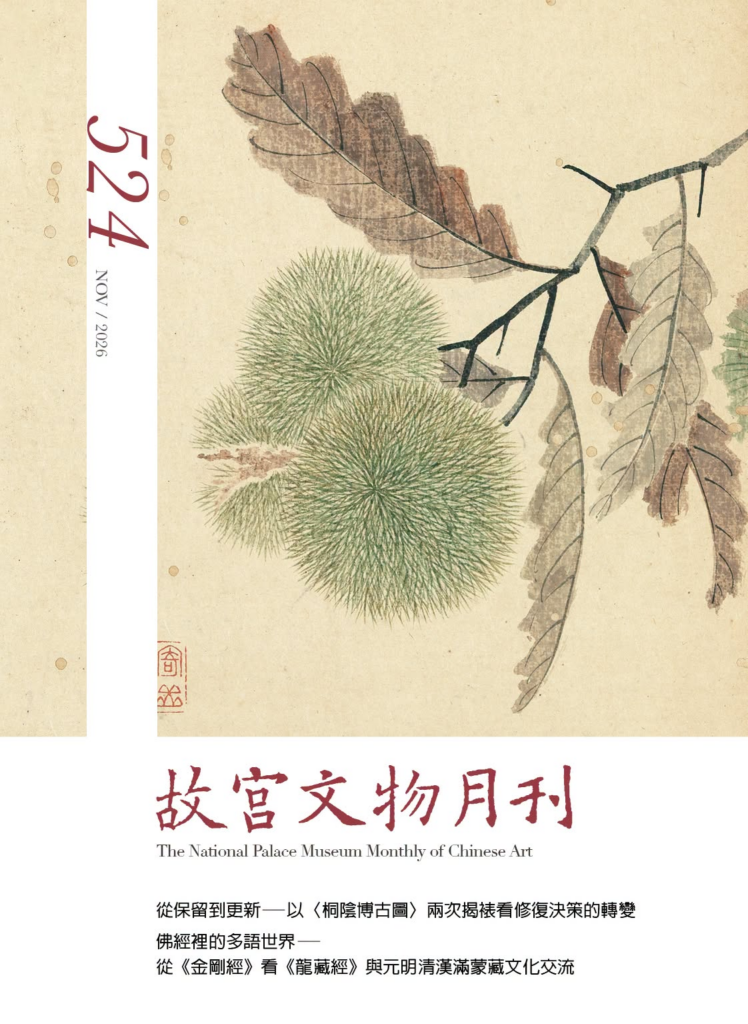
How did the Diamond Sutra connect Buddhist worlds across languages and dynasties?
This article traces the translation, copying, and printing of the Diamond Sutra under the Yuan, Ming, and Qing. Taking the National Palace Museum’s Tibetan Dragon Canon as a point of departure, it brings comparative philology into dialogue with Buddhist history and the material culture of the imperial court.
Texts and objects across dynastic boundaries
Chinese, Manchu, Mongolian, and Tibetan texts are read alongside gold-ink manuscripts and a jade edition of the sutra. The continued use of the Yuan monk Sicong’s commentary in Ming and Qing court editions reveals the persistence of textual traditions across changes of dynasty. A Ming manuscript commissioned by the eunuch Yang Wuming and a jade edition made under the Yongzheng emperor also illuminate the relationship between religious practice, craftsmanship, and court patronage.
The Dragon Canon in a multilingual Buddhist world
The Tibetan Dragon Canon, copied in gold ink during the Kangxi reign, forms part of a longer history of Qing investment in Buddhist scriptures. Comparing different versions of the Diamond Sutra, including the presence or absence of a concluding mantra, helps distinguish their textual and religious lineages.
Qianlong, Changkya, and the work of translation
The article examines the Chinese–Manchu–Mongolian–Tibetan edition revised by the Qianlong emperor and Changkya Rölpé Dorjé, and its relationship to the Manchu Buddhist canon. Variants, word order, Buddhist terminology, and loanwords reveal the roles of Tibetan and Mongolian in Manchu translation. These comparisons connect the history of a familiar scripture with broader questions of cultural exchange and Qing state formation.