
NSTC-Funded Research Project
Ethnic Classification and Social Order on the Tibetan Plateau and in Taiwan under the Qing Empire
Who Were the “Fan”?
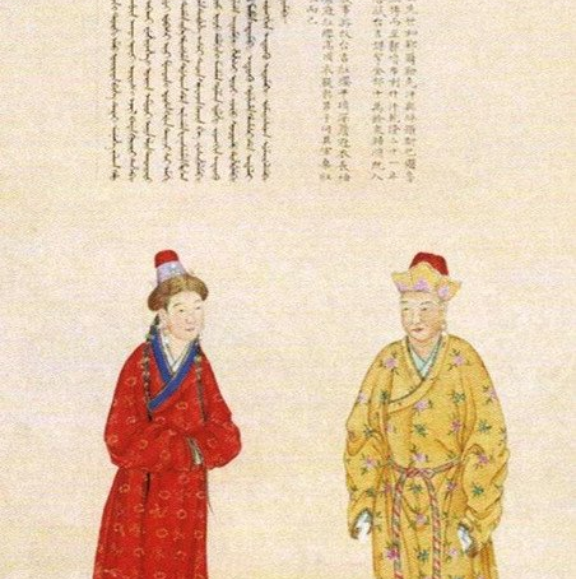
Taking fan 番 as its central concept, this project examines the systems of ethnic classification and governance that the Qing empire built as it ruled the Qinghai–Kham–Tibet plateau and Taiwan’s Indigenous peoples. Used since Middle Chinese to designate non-Han frontier peoples, fan became further institutionalized under the Qing: in Tibet it generated an administrative vocabulary of tufan 土番, fanseng 番僧 (Tibetan monks), and fanguan 番官 (Tibetan officials), while in Taiwan it took shape as a tiered system distinguishing shengfan 生番 (“raw,” unincorporated fan) from shufan 熟番 (“cooked,” incorporated fan).
Drawing on historical philology, institutional history, comparative history, and gender perspectives, the project analyzes how the Qing court constructed a cross-regional imperial language of governance through the translation of terms, the building of institutions, and administrative practice. It pays particular attention to the translation and transplantation of institutions between regions, and to the roles of women—such as female native officials and chieftains (nü tuguan 女土官, nü tusi 女土司)—within the fan administrative system. Combining fieldwork and oral history, the research also foregrounds the historical memories and interpretive perspectives of local communities, complementing and rethinking a historiography centered on official sources, with the aim of building an empirically grounded comparative model of Qing ethnic classification and governance.
- Institute of History and Philology, Academia Sinica
- Three-year project beginning January 2026
NSTC-Funded Research Project
Ethnic Classification and Social Order on the Tibetan Plateau and in Taiwan under the Qing Empire
Who Were the “Fan”?
Taking fan 番 as its central concept, this project examines the systems of ethnic classification and governance that the Qing empire built as it ruled the Qinghai–Kham–Tibet plateau and Taiwan’s Indigenous peoples. Used since Middle Chinese to designate non-Han frontier peoples, fan became further institutionalized under the Qing: in Tibet it generated an administrative vocabulary of tufan 土番, fanseng 番僧 (Tibetan monks), and fanguan 番官 (Tibetan officials), while in Taiwan it took shape as a tiered system distinguishing shengfan 生番 (“raw,” unincorporated fan) from shufan 熟番 (“cooked,” incorporated fan).
Drawing on historical philology, institutional history, comparative history, and gender perspectives, the project analyzes how the Qing court constructed a cross-regional imperial language of governance through the translation of terms, the building of institutions, and administrative practice. It pays particular attention to the translation and transplantation of institutions between regions, and to the roles of women—such as female native officials and chieftains (nü tuguan 女土官, nü tusi 女土司)—within the fan administrative system. Combining fieldwork and oral history, the research also foregrounds the historical memories and interpretive perspectives of local communities, complementing and rethinking a historiography centered on official sources, with the aim of building an empirically grounded comparative model of Qing ethnic classification and governance.
- Institute of History and Philology, Academia Sinica
- Three-year project beginning January 2026